
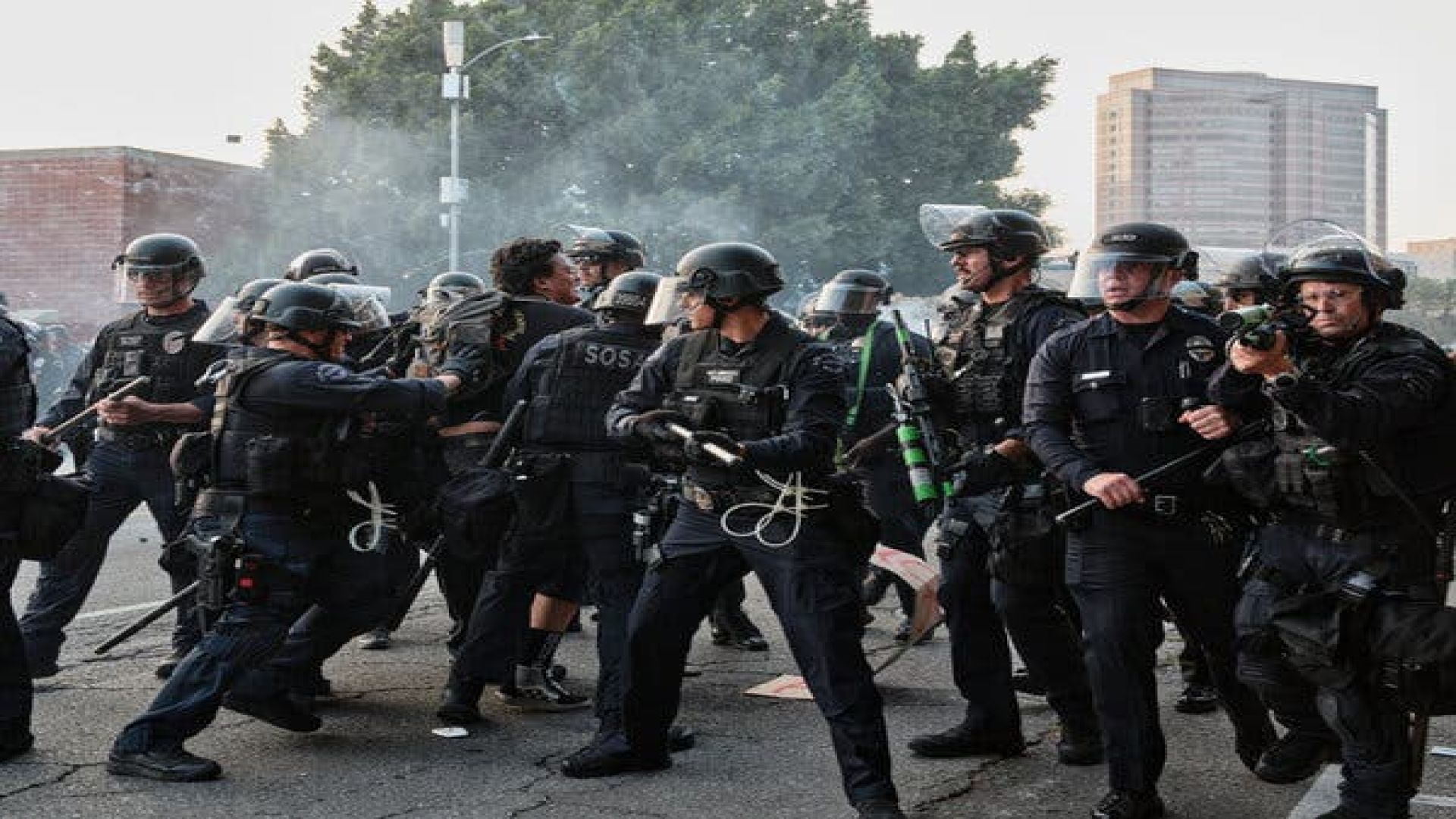
Protests erupted in Los Angeles this week following a series of immigration raids launched by the Trump administration. In response to growing public outrage, the president deployed 700 Marines and 4,000 National Guard troops to the city. Images of demonstrators clashing with law enforcement—throwing rocks, confronting riot police, and being met with tear gas—have drawn global attention and comparisons to unrest in other parts of the world.
Experts in protest movements and state response say that events in Los Angeles follow familiar patterns observed internationally. Political scientists argue that state crackdowns—especially against largely peaceful protests—can shift public perception and escalate tensions. Images of state violence may garner sympathy for demonstrators, portraying the government as oppressive. However, visuals of protest-related destruction can also support narratives that justify heavy-handed state responses, eroding public sympathy for the movement.
This dynamic was observed in Honduras after disputed elections in 2017, where violence overshadowed protesters’ initial demands and weakened international support. Similarly, in Colombia in 2021, protests that began over tax reforms grew into widespread dissent against police brutality after aggressive state action. The same pattern occurred in Mozambique and India, where government crackdowns led to significant casualties and arrests.
Crackdowns can also serve as turning points toward authoritarianism. Scholars warn that governments often use civil unrest as justification to expand executive power and suppress opposition. This was evident in Hong Kong in 2020 when Beijing imposed the National Security Law after months of protest, curbing democratic freedoms and consolidating central control.The events in Los Angeles are a reminder that protest management carries global resonance. Around the world, governments are balancing public order with civil liberties. As protests become increasingly interconnected through social media and shared grievances, the way states respond—peacefully or forcefully—can shape not only domestic outcomes but also influence global standards for democracy, dissent, and governance.