
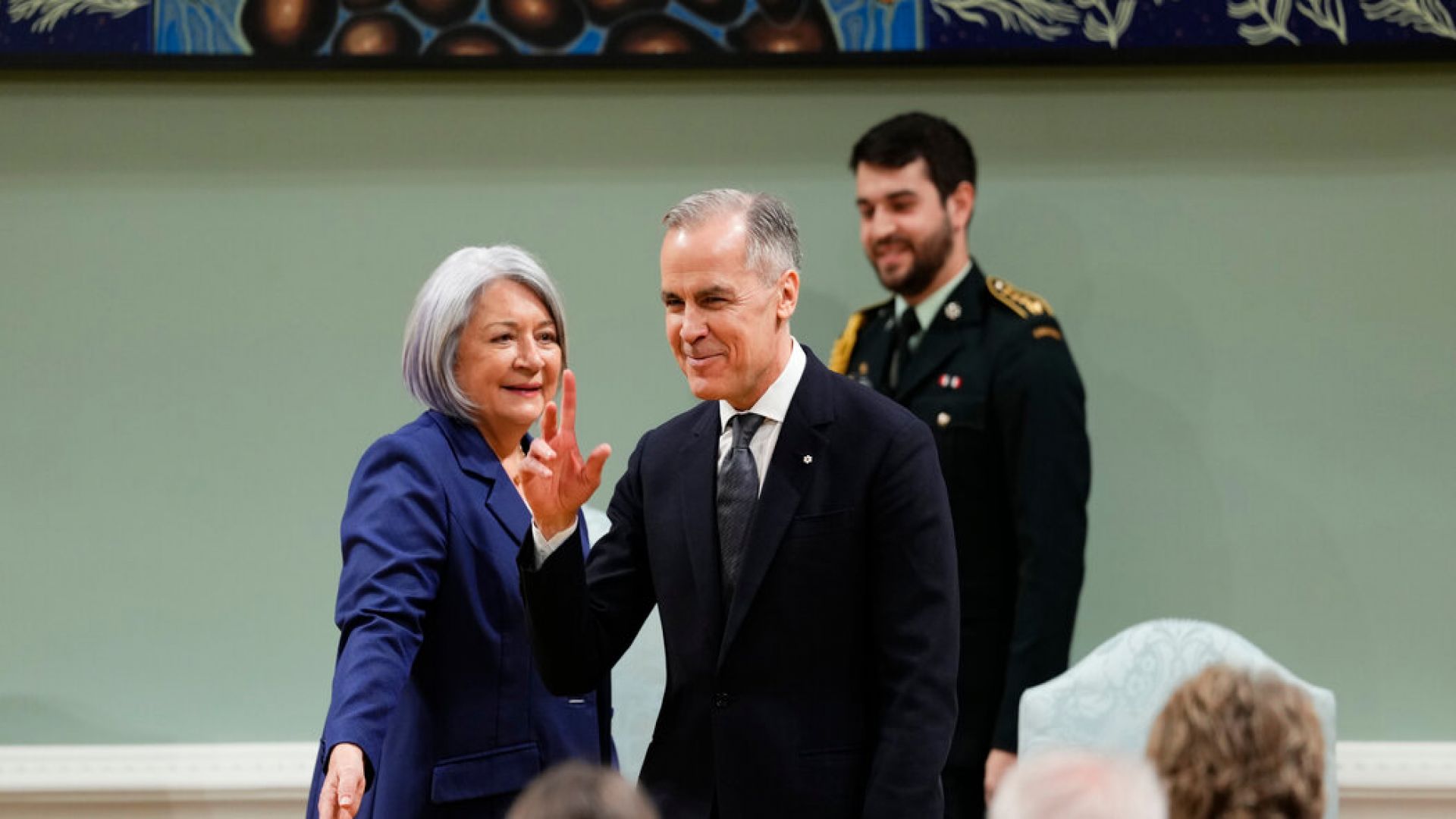
Mark Carney was sworn in as Canada’s 24th prime minister, stepping into a role fraught with challenges. Without a seat in Parliament and leading a minority government, he is expected to call for a federal election soon. Carney, a former governor of the Bank of Canada and Bank of England, replaced Justin Trudeau and won the Liberal leadership with 86% of party votes. His tenure begins amid a diplomatic crisis with the U.S., where President Trump has imposed tariffs and even suggested annexing Canada. Carney dismissed these threats as “crazy” and vowed to strengthen Canada’s economy.
His first act as prime minister was repealing a controversial consumer carbon tax introduced under Trudeau. He also signaled a tough stance on trade, keeping retaliatory tariffs against the U.S. until fair trade commitments are made. His administration will focus on economic stability, tax cuts, and attracting investment. Carney plans to visit London and Paris to strengthen international partnerships, signaling a pivot away from Canada’s traditional reliance on the U.S.
Carney’s appointment comes as Canada faces internal challenges, including inflation and immigration-driven pressures, which contributed to Trudeau’s resignation. His leadership style blends economic expertise with centrist policies, balancing fiscal discipline with pro-business initiatives.
Carney’s leadership mirrors broader geopolitical tensions, where economic policies and trade disputes shape international relations. Canada’s strained U.S. ties echo similar rifts seen in Europe, where Brexit and economic nationalism have tested alliances. Trade conflicts between the U.S. and China, as well as the EU’s recent tariff battles, highlight a global shift toward protectionism. As Canada navigates economic uncertainty, Carney’s approach may serve as a case study for balancing national interests with globalization, a challenge faced by leaders worldwide.