
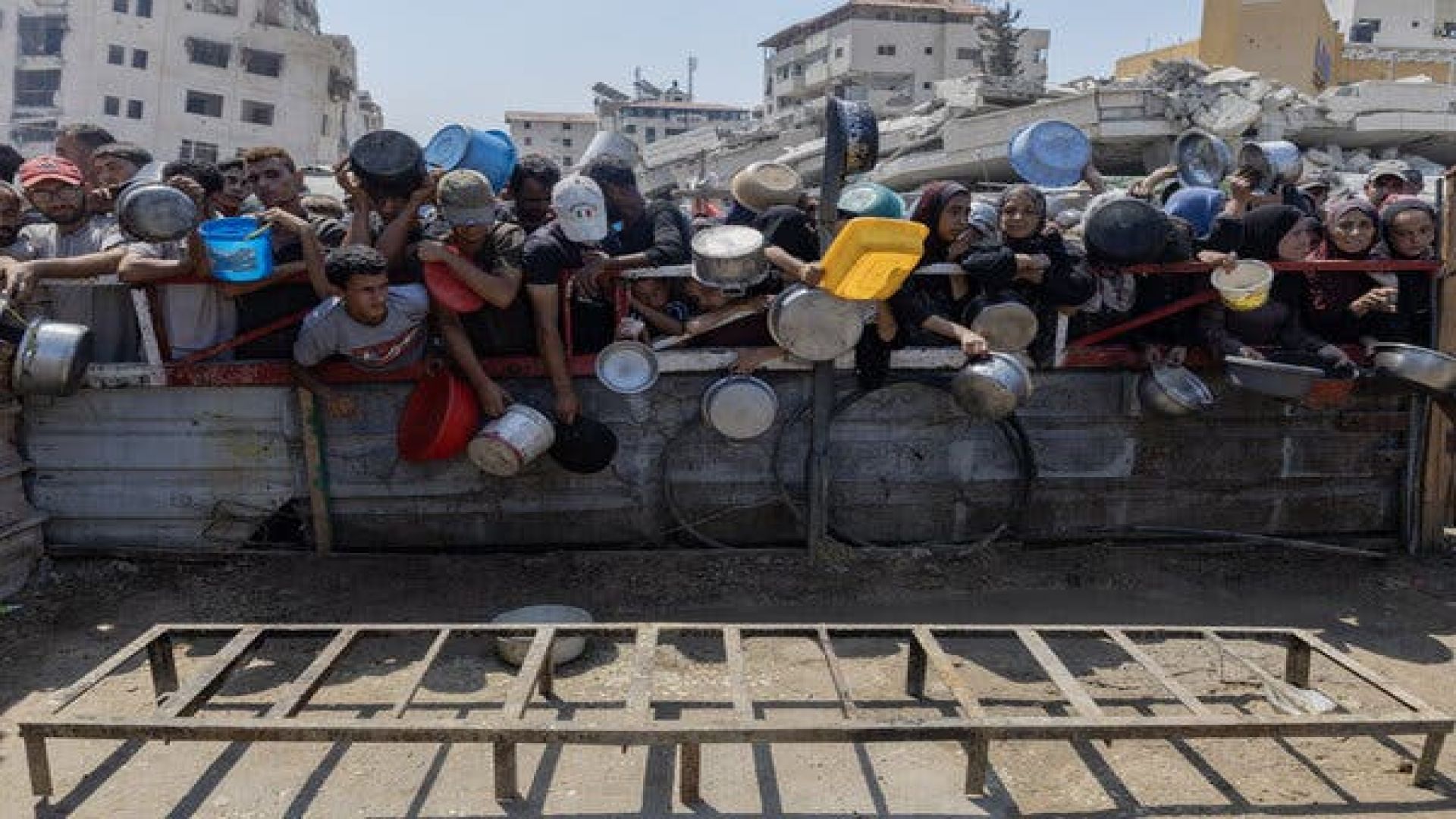
A famine is now unfolding across most of Gaza, according to the Integrated Food Security Phase Classification (I.P.C.), a U.N.-backed group. Months of Israeli restrictions on humanitarian aid—particularly between March and May—have created catastrophic food insecurity, with one-third of Gaza’s population going without food for days. Hunger-related deaths are rising due to a combination of starvation, malnutrition, and disease.
Israel's full blockade in early March, justified by unsubstantiated claims that Hamas was stealing aid, led to a complete halt of food supplies. Although Israel partially lifted restrictions in May, it simultaneously shifted aid distribution away from U.N. coordination toward a privatized system run by the U.S.-funded Gaza Humanitarian Foundation. This system, relying on limited distribution sites within Israeli-controlled areas, forces Palestinians to travel miles through war zones. Many are killed en route by Israeli gunfire, despite Israel's claims of using "warning shots." International doctors have disputed this, citing torso wounds as evidence of deliberate targeting.
Food in local markets is unaffordable—flour and tomatoes cost up to $30 per kilogram—leaving residents with the grim choice of risking death by starvation or by bullets. The Gaza Humanitarian Foundation, backed by Israeli and American actors, has been criticized by 15 international rights groups for undermining humanitarian principles and operating with military-style control.Israel maintains that the U.N. can deliver unlimited aid but blames its delays on inefficiency. The U.N. counters that Israeli inspections, active conflict, and the risk of violence impede delivery. Aid trucks take an average of 20 hours to pass border checks, often met by desperate crowds, some of whom loot supplies—leading to further violence.
Gaza's famine underscores broader concerns about the weaponization of humanitarian aid in modern conflicts. As global crises escalate—from Sudan to Ukraine—the international community faces mounting pressure to safeguard aid neutrality and access. The Gaza case highlights the danger of politicizing humanitarian infrastructure, setting a precedent with global implications for civilian survival in war zones.