
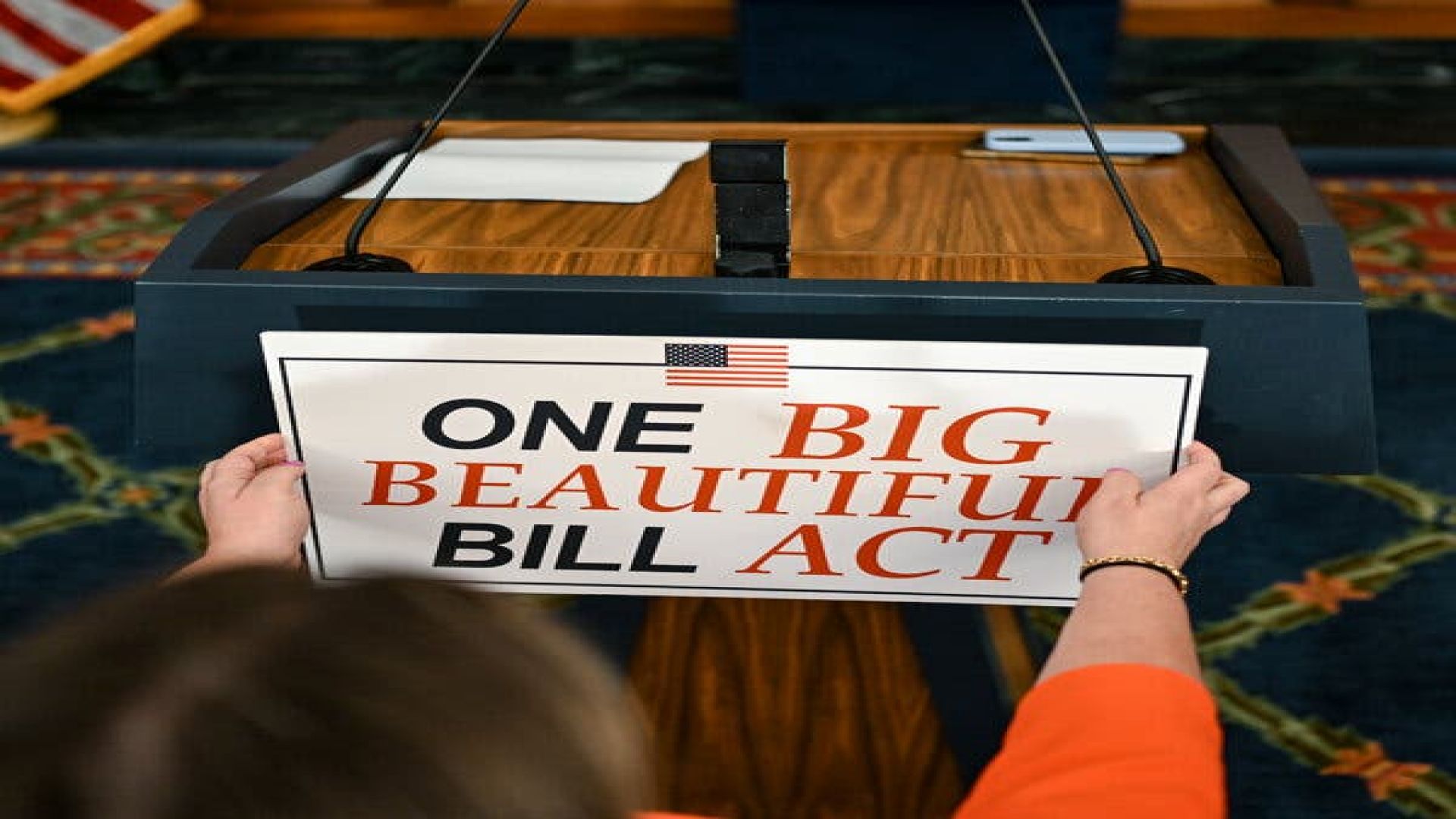
President Trump’s “One Big Beautiful Bill,” aimed at extending the 2017 tax cuts and offsetting them with deep reductions to social safety net programs, is inching toward passage despite widespread discomfort—even among Republicans. The bill barely cleared the House and has been heavily revised in the Senate, where several provisions were struck down by the parliamentarian for violating budget rules. Lawmakers are now scrambling to salvage key elements before a final vote, which is likely to occur within days.
The legislation has evolved into a policy catchall, combining tax breaks with unrelated measures, such as deregulating artificial intelligence, loosening gun laws, and selling public lands. Trump has rallied support but remains unpredictable, often telling lawmakers he agrees with their concerns, only to shift positions later. This has complicated negotiations, especially around Medicaid cuts, which some senators argue go too far.
Despite internal divisions—between deficit hawks, moderates, and those facing tough re-election battles—Republicans feel compelled to pass the bill. Failure to extend the 2017 tax cuts would result in automatic tax increases, and Trump’s campaign promises on tips and overtime remain popular. Still, the bill’s cuts to Medicaid and food assistance are politically risky, especially in swing districts.
Underlying the debate is a broader effort by Senate Republicans to redefine budget assumptions. By treating temporary tax cuts as permanent, they argue the extension doesn’t count as new spending. It’s a reframing tactic that masks long-term fiscal impact, akin to justifying a luxury expense by pretending it was always part of the plan. Despite its flaws, the bill’s momentum reflects a sense of urgency, loyalty, and a narrowing legislative window.