
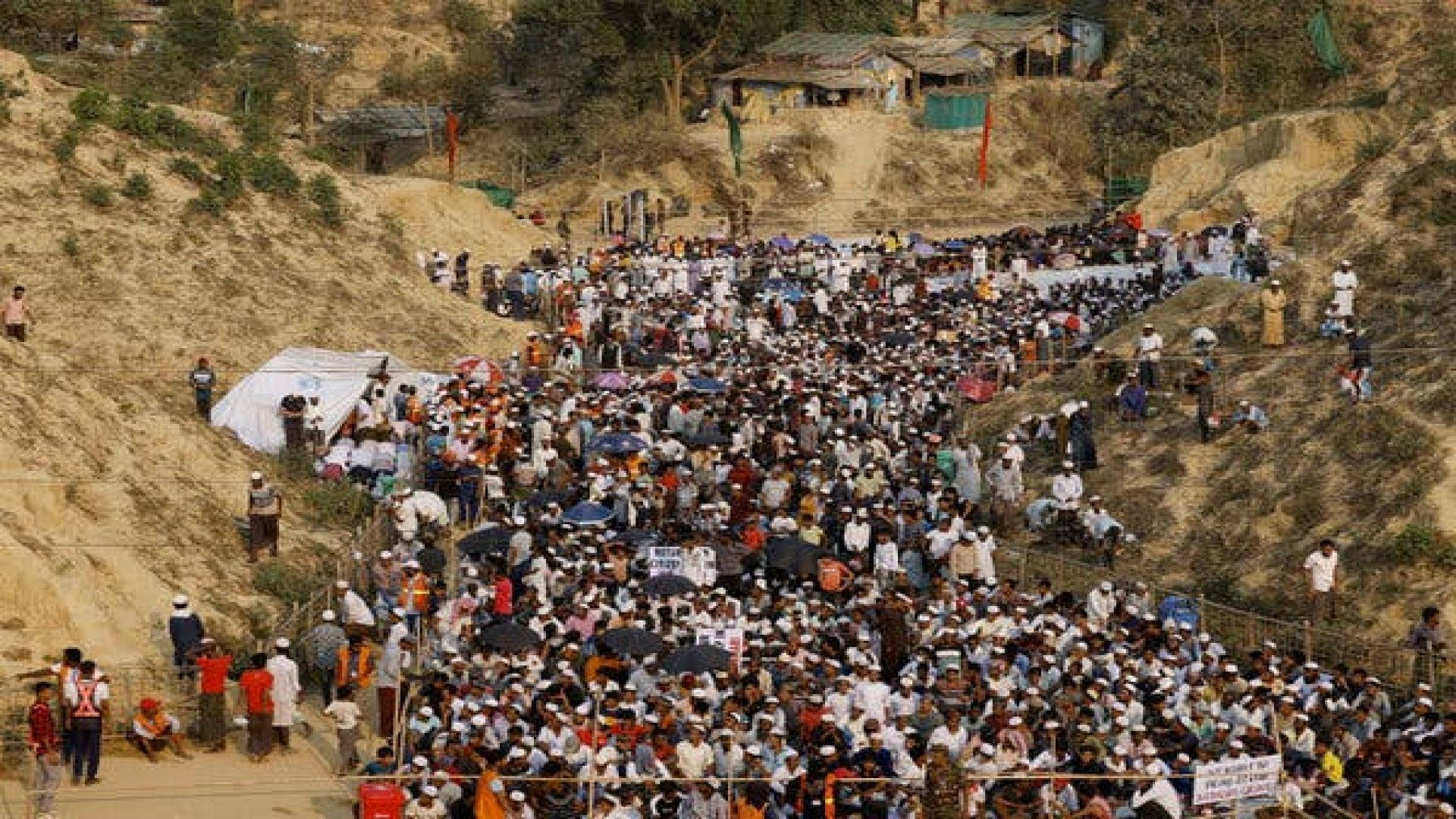
More than a million Rohingya refugees in Bangladesh’s Cox’s Bazar camp face severe food shortages as international aid declines. The United Nations warns that rations will drop in April to dangerously low levels—just 18 pounds of rice, two pounds of lentils, a liter of cooking oil, and a handful of salt per person for the entire month.
The crisis is exacerbated by the Trump administration’s freeze on aid, which has left humanitarian organizations struggling to fill funding gaps. European nations, redirecting budgets toward military spending amid rising tensions with Russia, have also reduced their aid contributions. U.N. Secretary-General António Guterres, visiting the camp, called the cuts a looming disaster, warning that only 40% of necessary humanitarian aid will be available in 2025.
Cox’s Bazar, the world’s largest refugee camp, houses over a million Rohingya who fled ethnic cleansing in Myanmar in 2017. Isolated and unable to work in Bangladesh, they rely entirely on aid for survival. The current food budget of $12.50 per person per month has already left 15% of children acutely malnourished—the highest rate since the mass exodus. If funding falls further to $6 per month, malnutrition, crime, and deadly escape attempts will likely rise.
The Rohingya crisis reflects a broader humanitarian funding shortfall as global conflicts intensify. Similar funding crises affect refugees in war-torn regions like Syria, Sudan, and Gaza. As Western governments shift priorities to military readiness, millions dependent on aid face worsening conditions. The situation underscores growing global inequality—while defense spending rises, humanitarian programs shrink. The outcome in Cox’s Bazar may serve as a warning for refugee populations worldwide, highlighting the urgent need for sustained international cooperation in humanitarian relief.