
Redlining Effects On Disproportionate Incarceration Rate of Black Americans
Author: Anna Lu
May 08, 2026
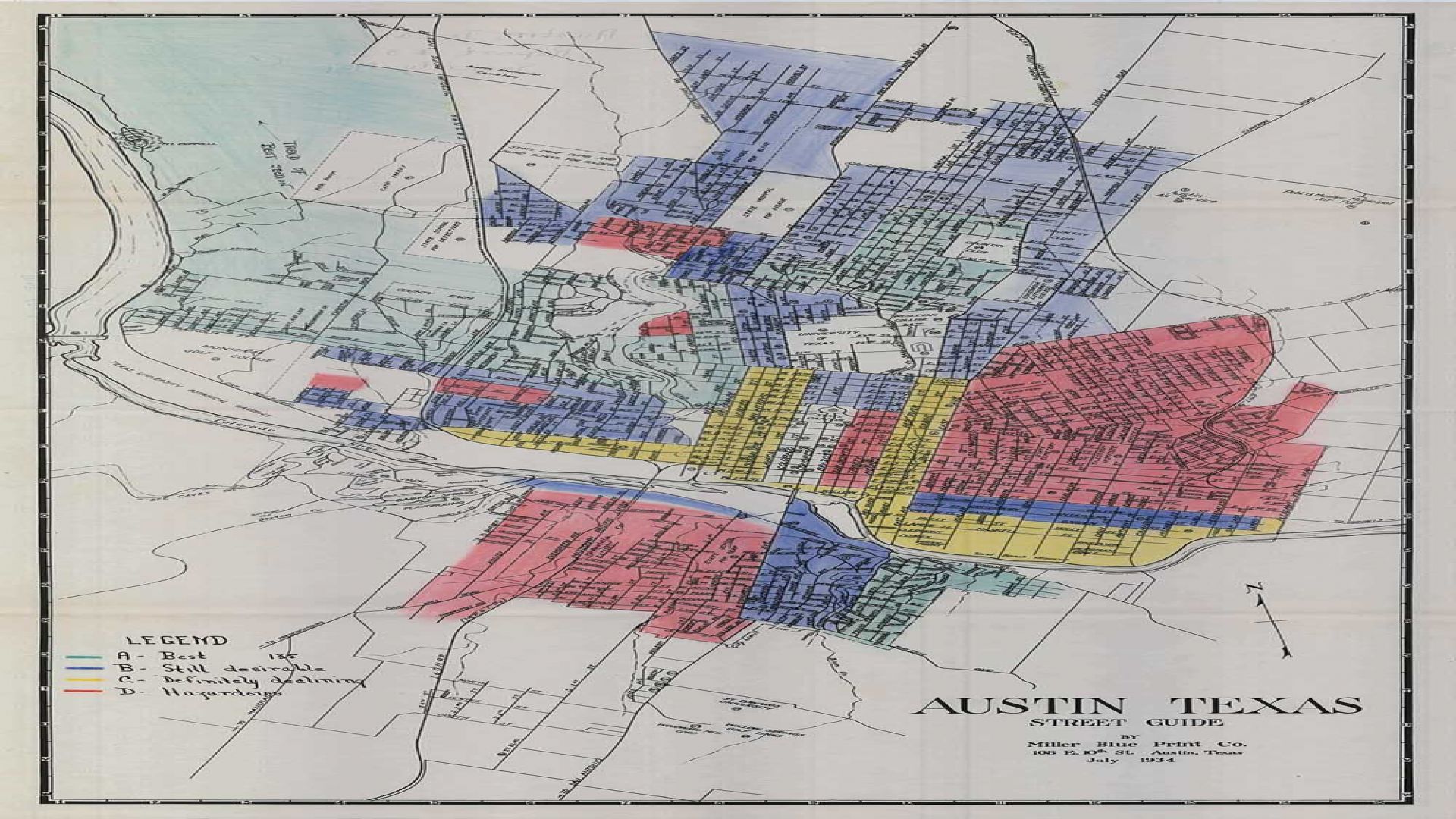
“In reality, the ‘war on drugs; has been a war on people,” is a widely used slogan by civil-minded activists (Amnesty International, n.d.). This phrase acts as a cry for how the Black population has been targeted and overly incarcerated due to historical segregation. Most importantly, the racial disparities in the criminal justice system, impacted by housing segregation, are de jure, through the implementation of legal policies enforced in the War on Drugs and over-policing. Specifically, the biased policies include sentencing disparities between crack and cocaine, worsened by the ignorance of the judicial system. Although the rate of drug offenses is similar across all ethnic groups, Black communities are falsely thought to be at higher risk. Furthermore, the practice of redlining in the United States is the primary factor contributing to the disproportionate incarceration rate of Black individuals.
Redlining, a practice of zoning neighborhoods, started when the Home Owners’ Loan Corporation (HOLC) created “Residential Security” maps in the 1930s. These maps graded neighborhoods and cities in 4 colors: “green for the ‘Best,’ blue for ‘Still Desirable,’ yellow for ‘Definitely Declining,’ and red for ‘Hazardous’” (Mitchell, 2018). The Jim Crow Laws also kept Black communities away from white spaces, forcing them into the red neighborhoods that were labeled hazardous. In 1934, the Federal Housing Administration reinforced redlining practices by giving mortgages primarily to white applicants while denying Black applicants, which contributed to the racialized wealth gap (Almeida, 2021). Industry-wide disinvestment from Black communities had occurred because the federal and state governments refused loans and insurance to redlined neighborhoods. Housing segregation in the US was embedded in the legal system/policies (de jure) and not an individual choice (de facto). Poor economic and social resources, created in redlining areas, resulted in an unbalanced incarceration rate of Black people, exceeding the incarceration rate of white people per capita. While the Black population only makes up 14 percent of the total US population, they make up 41 percent of the inmate population (Sawyer & Wagner, 2025).
The judicial system contributes to this disproportionate incarceration rate. In the 1987 McCleskey v. Kemp case, McCleskey, an African American man, was given the death penalty. In response to his sentencing, he filed a habeas corpus that challenged the biased and unconstitutional basis of the Georgia death penalty system (Quimbee, 2020). He cited the Baldus study in his claim, which found that “people accused of killing white victims were four times as likely to be sentenced to death as those accused of killing Black victims” (Equal Justice Initiative, 2011). However, the federal district court and the court of appeals rejected the argument despite being presented with factual data, with Justice Lewis Powell stated that such “disparities in sentencing [were] ‘inevitable’” (Quimbee, 2020; Equal Justice Initiative, 2011). So while the Baldus study showed that death penalty court cases were racially biased, and the court acknowledged the fact that race factored into sentencing, they continued to ignore the racial disparities in ruling because of its supposed inevitability. If McCleskey had successfully challenged and overturned his sentence, the whole judicial system would have to be fixed to address all racially biased sentences in the past. Thus, the McCleskey v. Kemp’s decision denied the acknowledgment of racially biased rulings from the past, and provided support for all the racial disparities in cases of the future. These same biases in the legal system are echoed in cases of non–violent drug offenses.
Racial disparities in prison resulted from the way the War on Drugs targeted Black communities. The War on Drugs was an effort in the US to stop illegal drug abuse by increasing the incarceration rate of drug offenders in the 1970s. Contrary to its intended purpose, the increase in police enforcement targeted the Black communities specifically. From the start of the War on Drugs in 1974 to 2019, “the U.S. prison population jumped from 240,593 to 1.43 million Americans” (Morrison, 2021). Furthermore, President Nixon explicitly targeted the Black population through racially biased policies that were pushed under the War on Drugs. John Ehrlichman, President Nixon’s domestic policy chief, admitted that,
The Nixon campaign in 1968, and the Nixon White House after that, had two enemies: the antiwar left and Black people. You understand what I’m saying? We knew we couldn’t make it illegal to be either against the war or Black, but by getting the public to associate the hippies with marijuana and Blacks with heroin and then criminalizing both heavily, we could disrupt those communities. We could arrest their leaders, raid their homes, break up their meetings, and vilify them night after night on the evening news. Did we know we were lying about the drugs? Of course we did (LoBianco, 2016).
This quote proves that from the very beginning, the sole purpose of the War on Drugs was to target Black communities by criminalizing them through the legal system. In fact, these policies were intentionally made to create surveillance over the Black communities without having to ver mention the word “Black.”
President Nixon’s actions still have effects today, as seen in the 2024 US presidential debate between Kamala Harris and Donald Trump. Through enacting the First Step Act, Trump allowed judges to give non-violent drug offenders less time in jail, while Harris supported decriminalizing marijuana use (Rivera & McDaniel, 2024; Pereira & Hutzler, 2024). The policy failure that the War on Drugs brought had not ended; in fact, it is a continual fight for the people who still hold the power to reform these policies that targeted the Black communities, starting with the way they address it: political campaigns.
The Black population was also targeted due to racist policing permitted during the War on Drugs. The Supreme Court ruling in Terry v. Ohio 1968 allowed for over-policing in Black neighborhoods. In this case, the Supreme Court allowed a police officer to “stop and frisk” Teddy, along with two other men who were casing a shop with a concealed weapon, but had yet to commit any crime (Terry v. Ohio, 1968). Regardless of the 4th amendment, which promised all Americans “the right […] to be secure in their persons, houses, papers, and effects, against unreasonable searches and seizures,” police were then allowed, as they are now, to stop and pat down one’s clothing if the police found them suspicious of a crime (U.S. Const. amend. IV). With the permission of over-policing in allegedly “risky” areas, and redlining maps that showed exactly where police officers should focus on, “Black families in the 1930s were 40 times more likely to be redlined” (Case Western Reserve University, 2023). If the redlining maps hadn’t been produced in the first place, then Black neighborhoods and families would not be correlated to poor areas with high crime rates.
After “stop and frisk” practices were legalized through Terry v. Ohio, there were several legal loopholes to be exploited by racist police, namely the gray area of who could be considered suspicious. As a result of its vague definitions, “Stop and frisk” mainly focused on putting Black people against walls to pat them down in search of drugs and weapons. While all ethnic and racial groups had similar rates of carrying drugs, Black communities were put behind bars because they were targeted in drug searches. Crime will usually be found where people look for it. This action of over-policing still occurs today in Washington, D.C., where “despite Black residents making up just 44 percent of D.C.'s population, they account for a staggering 70 percent of those stopped” by the Metropolitan Police Department (Gilstrap, 2024). Racial biases are allowed in policing practices due to how, in the past, certain areas were seen to be “more likely of crime.”
The racial disparities are evident in the youth population based on the type of facilities to which they are sent. Black youth are more likely to be transferred into adult jails, making up “67.7 percent of mandatory and discretionary direct file transfers in 2016” (Race and Juvenile Justice, 2022). In contrast, white youth mostly stay in juvenile detention centers for non-violent drug offenses. Even though both commit non-violent drug offenses, the different types of facilities they will likely spend time in show how their acts are valued at different severities, resulting in “Black youth prison sentences that were, on average, 7.8 percent longer” (Race and Juvenile Justice, 2022). Sentencing disparities also differ based on the type of drugs that groups have access to.
Sentencing disparities between crack cocaine and powdered cocaine are disproportionately fixed in the Black population. To limit the use of drugs, the 1986 Anti-Drug Abuse Act created a “100-to-1 disparity in sentencing for crack vs. powder cocaine” (ACLU, 2010). Due to the historical HOLC redlining maps, Black communities are forced into less economically and socially resourced areas, where “crack cocaine was popularized because of its affordability” (Turner, 2025). Crack cocaine is sold in units of rocks, with each rock costing “between $3 and $35.” Powdered cocaine is sold in units of grams, with each gram costing around “$100” (U.S. Department of Justice, 2002). The exaggerated range of prices, along with the limited neighborhood resources, are what associate Black Americans with the use of crack cocaine, while white communities are more likely associated with powder cocaine.
To consume the cocaine, crack cocaine users have to heat and inhale the vapor, while powder cocaine users usually snort the powder (Hodgman-Korth, 2025). Crack cocaine usage, forced by the inequitable socioeconomic status, is more harmful to its target buyers with more immediate euphoric effects and health concerns, increasing the risk of addiction (Hodgman-Korth, 2025). It’s ironic how society pressures Black communities to use these more psychologically addictive drugs that induce greater systemic violence, then acts as the ultimate protector to take these “violent” groups away from society.
More recently, “officials noticed 81 percent of convicted crack offenders were Black” in 2019 (Murray, 2025). These biased convictions of crack offenders are still in practice today. With the limitations of income caused by redlining, Black impoverished communities are more prone to using the more affordable crack cocaine, which has been legally targeted to receive harsher sentences compared to white successful communities who are more likely to afford powdered cocaine (Powder vs. Crack, 2019). These unjust policies are known to be intentionally embedded within the system.
The legal system has continuously sentenced Black Americans with the creation of the Three Strike Law to control them within the system. The Three Strike Law, implemented in 1993, increased punishments for repeat crime offenders with the intention to “keep murderers, rapists, and child molesters behind bars” (Stanford Law School, n.d.). Instead, “over 45 percent of inmates serving life sentences under the Three Strikes law [were] African American[s]” who committed non-violent crimes (Stanford Law School, n.d.). When it was first implemented, “African Americans were imprisoned under California's Three Strikes law at a rate 13 times that of whites” (Chen, 2014). This means that African Americans are able and likely to receive the same long-term sentencing for non-violent crimes of drug offenses as someone who committed violent crimes, such as murder and rape. The struggle to survive in the outside world after the release from conviction has resulted in “70 percent of people released from prison […] return[ing] within a few years [or] months” (TEDx Talks, 2013). The system supports a cycle of incarceration within Black communities, with longer sentencing and harsher consequences each time of return, resulting in the Black population being permanently segregated from society.
The limitations after release: restrictions when getting a job, buying a house, and even getting food stamps, force Black people who were convicted back into the system (TEDx Talks, 2013). Lucas, a Black man, was entangled within the criminal justice system due to his limited “ability to rehabilitate” after being released for drug offenses. He was denied employment, housing, loans, voting, and basic rights (Morrison, 2021). The criminal justice system limits the legal rights of Black communities by controlling them in jails, which demolishes their rights even after they are released. Fixes must occur as 28 states still implement the Three Strike law today (Temme, 2023).
The unbalanced percentages of Black Americans in jail continue to demonstrate the systemic racism in the legal system. Black people are still receiving targeted treatments, making them more likely to spend their lifetime restricted of rights. These harsher and longer sentences are still impactful today. For instance, in the ongoing COVID-19 pandemic, Black inmates’ health in prison are not prioritized because “Black people are given sentences that are 20 percent longer than white people for committing the same crimes” (O’Grady, 2023). The Black population is not only overrepresented within the prison population, but experience exacerbated racial disparity in solitary confinement. During the pandemic’s initial year, the use of solitary confinement had increased “close to 500 percent over previous levels” (Raben Group, 2020). The disproportionate representation of people of color within restrictive housing means that the spread of diseases will most severely impact them, especially as the virus spreads more easily in a densely packed environment. Solitary confinement during the ongoing COVID-19 pandemic has blurred the line between punitive housing segregation and segregation for public health purposes. The practices are not interchangeable (LeMasters et al., 2023). For it to be used interchangeably shows the willingness to let Black people become the victims of neglect in public health within the prison system.
The Drug Policy Reform Act, introduced in 2021, should be passed. The bill “eliminates federal penalties for some drug-related offenses” (Drug Policy Reform Act of 2021, 2021–2022). The improvement of the rehabilitation system allows those released not to be impacted by their drug-related criminal records: to have the “ability to get or keep a job, to get a driver’s license, or to obtain federal welfare benefits, nor will they affect immigration status or voting status” (Bort, 2021). The protection of basic rights for incarcerated communities will decrease the number of returning offenders, reducing the enforcement of the Three Strike law. However, the Three Strike law should also be banned by federal law enforcement, as 28 states are still implementing it (Temme, 2023). Offenders should be sentenced on a case-by-case basis, as more Black offenders are sentenced to life penalties under the Three Strike Law, due to the targeting of legal policies and concentrated policing practices in redlined neighborhoods (ACLU, 2002). The legal system needs to be reconstructed in terms of addressing drug-related policies. Laws, policies, and regulations should be for protection and not restriction. By no means should it be an excuse for racism.
References
ACLU. (2002, March 17). 10 reasons to oppose “3 strikes, you’re out.” https://www.aclu.org/documents/10-reasons-oppose-3-strikes-youre-out
---. (2010, September 10). ACLU history: Black America: casualties of the ‘War on Drugs.’ https://www.aclu.org/documents/aclu-history-black-america-casualties-war-drugs
Almeida, L. (2021, August 6). A history of racist federal housing policies. MassBudget. https://massbudget.org/2021/08/06/a-history-of-racist-federal-housing-policies/
Amnesty International. (n.d.). Drug policy reform. https://www.amnesty.org/en/what-we-do/drug-policy-reform/
Bort, R. (2021, June 15). Democrats introduce bill to end the War on Drugs. RollingStone. https://www.rollingstone.com/politics/politics-news/drug-decriminalization-bill-cori-bush-bonnie-watson-coleman-1184378/
Case Western Reserve University. (2023, January 14). Analyzing the blueprints of redlining in Ohio. https://thedaily.case.edu/analyzing-the-blueprints-of-redlining-in-ohio/#:~:text= Neighborhoods in Ohio with any,redlined, according to the research.&text=The team's findings were published,research and criticism about race
Chen, E. Y. (2014). Three strikes legislation. In D. D. Jones-Brown, B. D. Frazier & M. Brooks (Eds.), African Americans and the Criminal Justice System: An Encyclopedia. Westport, CT: Greenwood Press. https://scholarcommons.scu.edu/cgi/viewcontent.cgi?article= 1004&context=poli_sci#:~:text=According to a report by,13 times that of Whites
Drug Policy Reform Act of 2021, H.R.4020, 117th Cong (2021-2022). https://www.congress.gov/bill/117th-congress/house-bill/4020
Equal Justice Initiative. (2011, January 7). David Baldus, author of groundbreaking study on race and the death penalty, dies. https://eji.org/news/david-baldus-dies/
Gilstrap, S. (2024, September 16). New ACLU findings show Black people are disproportionately targeted by MPD during stop-and-frisk encounters. WUSA9. https://www.wusa9.com/article/news/police/report-reveals-racial-disparities-in-dc-stop-and-frisk-practices/65-b2226c40-3167-4601-83dd-10508ca1970a
Hodgman-Korth, M. (2025). Crack vs. cocaine: What's the difference between crack and cocaine? American Addiction Centers. Retrieved November 27, 2025, from https://americanaddictioncenters.org/stimulants/cocaine/differences-with-crack
LeMasters, K., Maner, M., Behne, M. F., Kaplowitz, E., Evancho, P., & Brinkley-Rubinstein, L. (2023) Solitary confinement under the guise of public health: Lessons learned from COVID-19 and HIV. Health Affairs Forefront. https://www.healthaffairs.org/content/ forefront/solitary-confinement-under-guise-public-health-lessons-learned-covid-19-and-hiv
LoBianco, T. (2016, March 24). Report: Nixon aide says War on Drugs targeted Blacks, hippies. CNN Politics. https://www.cnn.com/2016/03/23/politics/john-ehrlichman-richard-nixon-drug-war-blacks-hippie/index.html
Mitchell, B. (2018, March 20). HOLC “redlining” maps: The persistent structure of segregation and economic inequality. NCRC. https://ncrc.org/holc/
Morrison, A. (2021, July 23). 50-year war on drugs imprisoned millions of Black Americans. AP News. https://apnews.com/article/war-on-drugs-75e61c224de3a394235df80de7d70b70
Murray, K. (2025, Feburary 25). The War On Drugs and race. Addiction Center. https://www.addictioncenter.com/news/2021/08/war-on-drugs-impact-on-black-people/
O’Grady, E. (2023, June 6). COVID prison releases expose key driver of racial inequity. Harvard Gazette. https://news.harvard.edu/gazette/story/2023/06/covid-prison-releases-expose-key-driver-of-racial-inequity/
Pereira, I., & Hutzler, A. (2024, September 5) Here’s where the 2024 presidential candidates stand on crime and criminal justice. ABC News. https://abcnews.go.com/Politics/2024-presidential-candidates-stand-crime-criminal-justice/story?id=103313094
Powder vs. Crack: NYU Study Identifies Arrest Risk Disparity For Cocaine Use. (2015, February 19). NYU. https://www.nyu.edu/about/news-publications/news/2015/february/-powder-vs-crack-nyu-study-identifies-arrest-risk-disparity-for-cocaine-use.html
Quimbee. (2020, October 5). McCleskey v. Kemp case brief summary | Law case explained [Video]. YouTube. https://www.youtube.com/watch?v=vQiJa6w66Q4
Raben Group. (2020, June). Solitary confinement is never the answer. https://static.prisonpolicy.org/scans/UTB-Report-62020.pdf
Race and Juvenile Justice. (2022, November 29). National Association of Criminal Defense Lawyers. https://www.nacdl.org/Content/Race-and-Juvenile-Justice#:~:text=Black youth made up 67.7,are youth in juvenile facilities
Rivera, A, J., Cheeseman, A., & McDaniel, J. (2024, September 10). Kamala Harris’s crime and gun policies, explained. Washington Post. https://www.washingtonpost.com/politics/interactive/2023/presidential-candidates-2024-policies-issues/kamala-harris-guns-crime/
Sawyer, W., & Wagner, P. (2025, March 11) Mass incarceration: The whole pie 2025, Prison Policy Initiative. Prison Policy. https://www.prisonpolicy.org/reports/pie2025.html
Stanford Law School. (n.d.). Three Strikes basics. https://law.stanford.edu/three-strikes-project/three-strikes-basics/.
TEDx Talks. (2013, October 16). The future of race in America: Michelle Alexander at TEDxColumbus [Video]. YouTube. https://www.youtube.com/watch?v=SQ6H-Mz6hgw
Temme, L. (2023, September 13). Three Strikes’ sentencing laws. Findlaw. https://www.findlaw.com/criminal/criminal-procedure/three-strikes-sentencing-laws.html#:~:text=Justice Sandra Day O'Connor,states have three strikes laws
Terry v. Ohio, 392 U.S. 1 (1968). https://www.ojp.gov/ncjrs/virtual-library/abstracts/terry-vs-ohio
Turner, D. S. (2025). Crack epidemic. In Britannica. https://www.britannica.com/topic/crack-epidemic
United Nations Office on Drugs and Crime. (2015, June). The drug war, mass incarceration and race. https://www.unodc.org/documents/ungass2016/Contributions/Civil/DrugPolicy Alliance/DPA_Fact_Sheet_Drug_War_Mass_Incarceration_and_Race_June2015.pdf
United States Census Bureau (2023). QuickFacts United States. https://www.census.gov/quickfacts/fact/table/US/PST045219
U.S. Const. amend. IV. https://constitution.congress.gov/constitution/amendment-4/
U.S. Department of Justice. (2002, March 17). Federal cocaine offenses: An analysis of crack and powder penalties. https://www.justice.gov/archive/olp/pdf/crack_powder2002.pdf

(for college and high school students)
Staff Writer Leader:SpencerCopyright © 2023 The Global Horizon 沪ICP备14003514号-6